How Much Do You Know About CO₂? From Storage to Real-World Application
Carbon dioxide is a colorless and odorless gas at ambient temperature and atmospheric pressure, possessing various physicochemical properties. It is widely used in industries such as manufacturing, agriculture, food, and healthcare. Under the carbon neutrality framework, its storage and transportation technologies have also become increasingly important.
The core of CO2 storage and application lies in reducing atmospheric emissions (storage) and creating economic value (application), forming a closed loop for carbon cycle management.
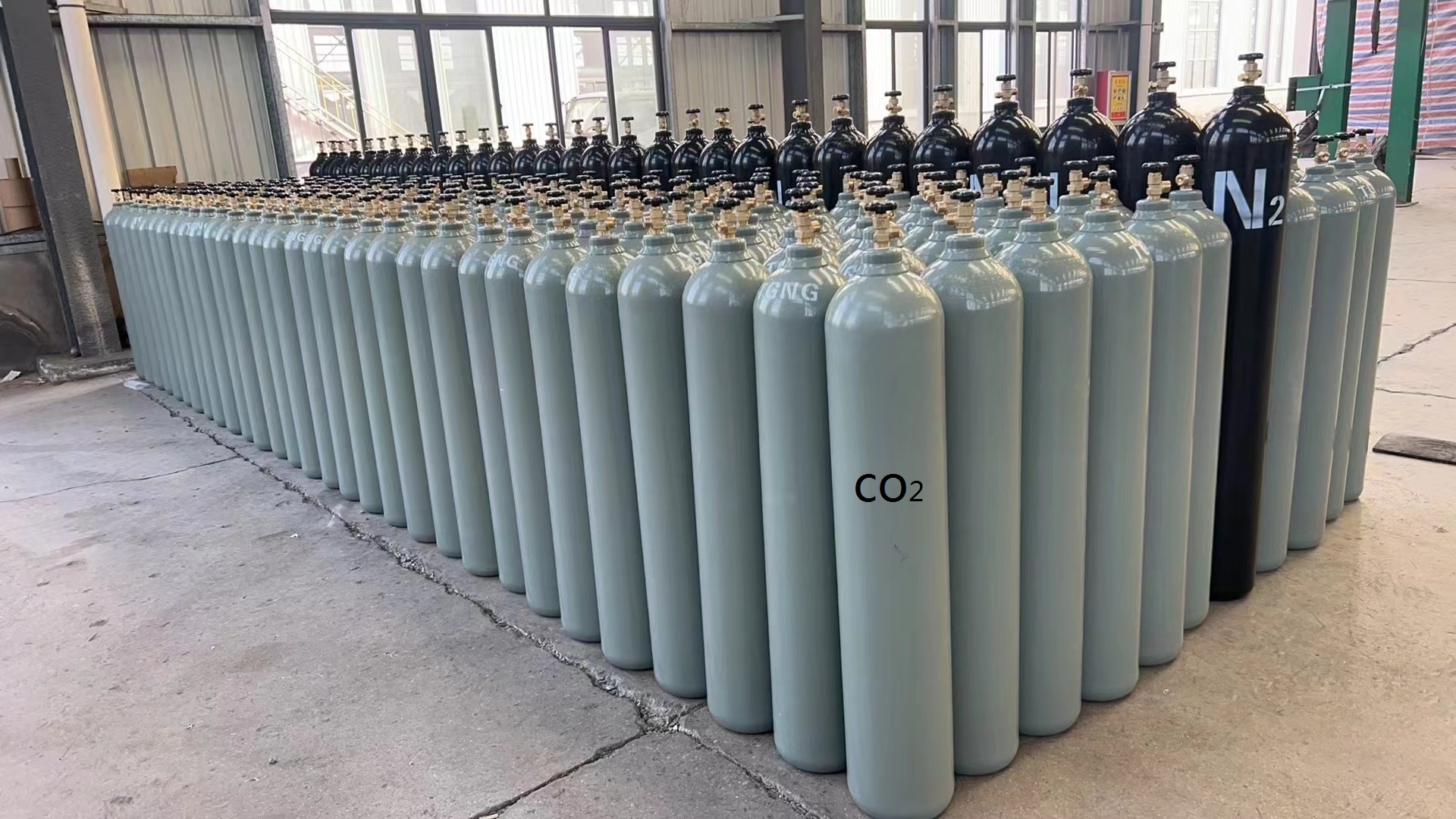
High pressure gaseous storage
Method: compressed gas CO2 is stored in pressure resistant steel gas cylinders.
Features: Low storage density, suitable for small-scale, short-term storage and transportation, such as fire extinguishers and welded gas cylinders.
Low temperature liquid storage
Method: keep CO2 in liquid state at low temperature and moderate pressure (about 2.2 MPa), and store it in insulated pressure vessels such as cryogenic storage tanks, cryogenic mobile tank, and tanker/semi-trailer , tank containers/ISO tanks etc.
Characteristics: The storage density is much higher than that of gas, making it the main method for large-scale storage and transportation in industry. The storage tank must have a good insulation layer to prevent evaporation loss.
Solid state storage (dry ice)
Method: at temperatures below approximately -78.5°C and atmospheric pressure, CO2 exists in solid form (dry ice).
Features: Stored in a specially designed insulated box. Dry ice will continue to sublime and needs to be replenished in a timely manner. Mainly used for local cooling and special effects.
Geological storage (Carbon Capture and Storage, CCS)
Method: Capture industrial emissions of CO ₂, compress and transport them to suitable underground geological structures, such as depleted oil and gas fields, deep saline aquifers, etc., for long-term or even permanent storage.
Characteristics: This is a key technology for addressing climate change and reducing the concentration of CO ₂ in the atmosphere. It has a huge scale, but the technology is complex and costly.
CO₂ Application (Carbon Capture, Utilization, and Storage, CCUS)
It focuses on converting captured CO₂ into usable products, achieving "carbon reuse" while reducing emissions.
Industrial Application
CO₂ serves as both a production input and a functional medium in industrial processes, adding value while sequestering carbon.
Chemical synthesis: Used as a raw material to produce high-value chemicals, such as methanol, urea, and polycarbonate (a key material for biodegradable plastics).
Building materials: Mixed into concrete or mortar to improve compressive strength; it can also react with minerals to produce carbon-negative building materials like carbonate aggregates.
Process medium: Acts as a protective gas in metal smelting to prevent oxidation, and as a cleaning agent in precision electronics manufacturing (replacing volatile organic solvents).
Energy Application: Enhancing Efficiency and Enabling Carbon Cycle
In the energy sector, CO₂ is mainly used to improve energy extraction efficiency and support low-carbon power generation.
Enhanced resource recovery
Enhanced Oil Recovery (EOR): Inject CO₂ into oil reservoirs to reduce oil viscosity and push remaining oil to production wells, increasing oil recovery rates by 10%-20% while storing CO₂ underground.
Enhanced Gas Recovery (EGR): Similar to EOR, it is used to extract natural gas from depleted gas fields.
Power generation support: Used in oxy-fuel combustion power plants, where CO₂ is mixed with oxygen for fuel combustion, simplifying subsequent carbon capture and reducing nitrogen oxide emissions.
Agricultural & Daily Life Application
CO₂ applications in these fields are more direct, closely related to food production and daily consumption.
Agricultural production: Used for greenhouse gas fertilization. Increasing the CO₂ concentration in greenhouses (from the ambient 400 ppm to 800-1200 ppm) can enhance crop photosynthesis, improving yields of tomatoes, cucumbers, and other crops by 20%-30%.
Daily consumption
Produces carbonated beverages, providing the characteristic fizz in drinks like cola and sparkling water.
Acts as a food preservative, replacing traditional preservatives in packaged foods (such as fresh meat and pastries) to extend shelf life by inhibiting microbial growth.


 H2 plant Hypower Project wind power to H2 2000NM3 per hour (1).jpg)
.jpg)