The difference between T50 and T75 ISO tanks
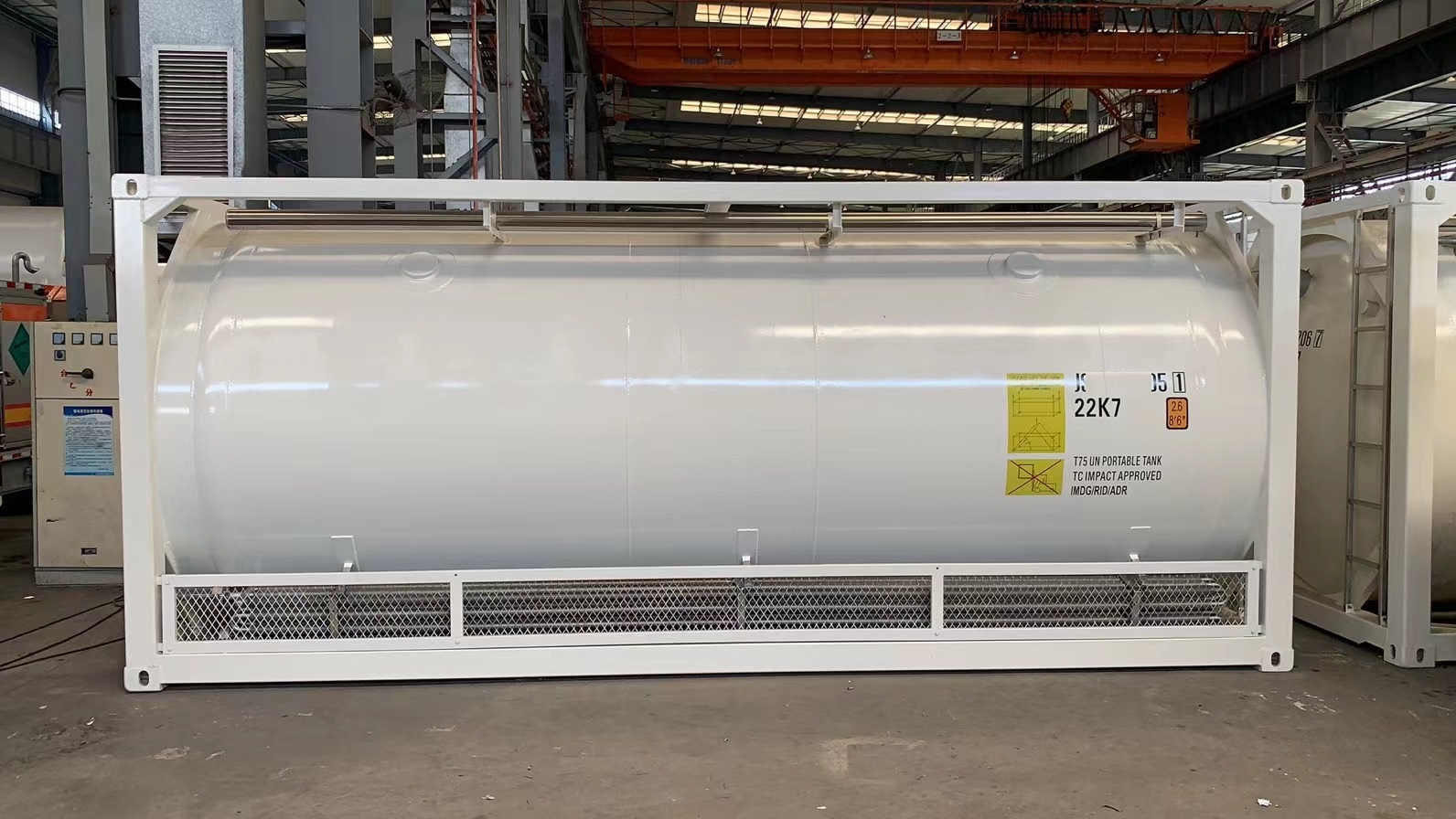
Although both T50 and T75 ISO tanks are used for transporting gases, they have essential differences in design purposes, key technical parameters, and structure. To help you quickly establish an overall concept, you can first visually compare their core differences through the following table:
|
Comparison dimension |
T50 ISO tank |
T75 ISO tank |
|
Design purpose |
High pressure gas transportation |
Low-temperature cryogenic liquid transportation |
|
Working pressure |
High working pressure (e.g. 1.8 MPa, 34.5 bar) |
Relatively low pressure (e.g. 21 bar) |
|
Working temperature |
-40°C to +50/55°C |
Extremely low temperature, can be as low as -196°C |
|
Insulation method |
uses sun visors and other materials for simple insulation |
high vacuum multi-layer insulation, or vacuum powder insulation |
|
Structural characteristics |
single-layer pressure vessel |
double-layer structure (inner tank+outer shell) with insulation layer |
|
Common transportation media |
liquefied petroleum gas (LPG),liquid ammonia and so on |
liquid nitrogen (LN2) , liquid oxygen (LO2), liquid argon (LAr), and liquefied natural gas (LNG) |
The difference between structure and insulation principle
The structural differences mentioned in the table directly determine their ability to insulate and maintain the medium state:
T50 tank: It is a single-layer pressure vessel with the core task of withstanding high internal pressure. It is usually not equipped with a complex insulation system, and sometimes only reduces the heat brought by solar radiation through sunshades, maintaining a high-pressure liquid state of the medium at ambient temperature.
T75tank: adopts a double-layer structure of "tank in tank". The inner liner carries low-temperature liquid, the outer shell serves as a protective cover, and the interlayer is evacuated to high vacuum and filled with special insulation materials (such as multi-layer super insulation materials or pearl sand). This greatly suppresses heat conduction and convection, ensuring that the medium remains in an ultra-low temperature liquid state for a long time.
Choose a tank based on its intended use
Based on the different physical characteristics mentioned above, their application scenarios are also distinct:
Application of T50tank: Designed specifically for transporting liquefied gases that require maintaining high pressure at higher ambient temperatures, such as liquefied petroleum gas (LPG) and liquid ammonia.Application of T75tank: Specialized in transporting liquids that require ultra-low temperature storage, such as liquid nitrogen (LN2), liquid oxygen (LO2), liquid argon (LAr), and liquefied natural gas (LNG). Its insulation performance is usually measured by the "static evaporation rate", and the lower the value, the better the insulation effect.
Selection precautions
In practical business, in addition to technical differences, it is also necessary to consider:
Regulations and certification: Both are strictly regulated special equipment/pressure vessels. When placing an order, it is essential to specify the shipping area (such as within China, global shipping) and the corresponding regulatory certification requirements (such as ASME, IMDG, TSG, etc.).Cost and operation: Due to its complex insulation structure and materials, the initial purchase cost of T75tankis usually higher than that of T50. But when choosing, it is important to consider operational needs comprehensively. For example, the excellent insulation capacity of T75 tank can effectively reduce the evaporation loss of low-temperature media during long-distance transportation.
Air Separation Plant/Nitrous oxide plant/CO2 recovery plant/Hydrogen plant/Acetylene Plant/Mobile Tank/ISO Tank Container/Cryogenic Storage Tank/LPG Storage Tank/Cryogenic Pump/Micro Bulk Tank /Cryogenic Semi Trailer Transport Tanker/LPG Semi Trailer Tanker/Dewar Flask/Vaporizer/Cylinders/Dry ice making machine/Calcium Carbide


 H2 plant Hypower Project wind power to H2 2000NM3 per hour (1).jpg)
.jpg)